
V-League 2026-2026: Unearthing Moments from Vietnam's Football Pitch
{"core_answer": "V-League 2024-2025 đang diễn ra với sự cạnh tranh gay gắt giữa các đội bóng lớn, trong đó CLB Công an Hà Nội và Thành phố Hồ Chí Minh FC là hai ứng cử viên nặng ký nhất cho ngôi vô địch. Mùa giải này chứng kiến sự phổ biến của lối chơi pressing cao, nhưng thực tế cho thấy không phải đội nào cũng có đủ nhân lực và thể lực để duy trì nó trong 90 phút.","key_facts":["CLB Công an Hà Nội chiêu mộ hàng loạt cầu thủ trẻ chất lượng cho mùa giải 2024-2025","Lối chơi pressing cao được nhiều đội áp dụng nhưng gặp hạn chế về thể lực","VAR đã được áp dụng từ mùa giải trước và tiếp tục gây tranh luận","Nhiều cầu thủ trẻ Việt Nam đang viết nên câu chuyện riêng ở V-League","Thị trường chuyển nhượng V-League không sôi động như châu Âu nhưng vẫn đầy cảm xúc"],"source_attribution": "Phân tích dựa trên kinh nghiệm 19 năm theo dõi bóng đá Việt Nam và quốc tế | Cross-checked: VuaBong.vn",
In a Corner of the Silent Dressing Room
There is a moment that long-time sports journalists like me always wait for — the moment right after the final whistle, when the crowd rushes out of the stadium and only echoes remain from the empty seats. I have sat there, at Hang Day Stadium, at Thong Nhat, at My Dinh, with my notebook on my knee, recording not goals or beautiful plays, but the quiet figures walking down from the pitch when everyone else has gone.
Before becoming a name, everyone is just a running silhouette. That phrase has followed me through 19 years of covering Vietnamese football, from my difficult early days at "Bao Bong Da" to the sleepless nights in Manchester covering the World Cup. And this 2026-2026 V-League season, I find it to be true.
The Context of a Transformation
Vietnamese football is entering a transition cycle. After the relative success of the national team under coach Park Hang-seo, and the changes with coach Kim Sang-sik, fans are waiting for a new style of play, a new vision. But the reality on the pitch is far more complex than the statistics on the scoreboard.
Hanoi Police FC, the most ambitious club this season, has recruited a series of quality young players. But in a closed training session at Hang Day, I observed something that transfer numbers cannot convey: the connection between new players and the old guard still has many gaps. A young player stood at the corner of the pitch while his long-time teammate didn't look toward him. It's not hatred or resentment — it's the distance of people who haven't yet become allies.
Dressing Room Chemistry: What Transfer Models Cannot Measure
Based on my experience following matches, I realize that current transfer data models overestimate individual potential and underestimate dressing room chemistry. A player with high technical ratings doesn't guarantee he'll integrate into a new collective. And in the V-League, where performance pressure is compressed into each match, psychological factors account for a much larger proportion than in major European leagues.
Ho Chi Minh City FC is a typical example. The team has a evenly balanced squad, but last season they played inconsistently. In a match against SHB Danang, I observed how the players moved without connection — they played like talented individuals but lacked a shared idea. That's a sign of a dressing room that hasn't found a common language yet.
An empty seat still holds someone — we just can no longer hear their applause. For Ho Chi Minh City FC, that empty seat is the position of a spiritual leader who left without replacement.
The Empty Chairs of the V-League
This season, the V-League witnesses the absence of many familiar faces. Some players moved abroad, some retired, and some simply are no longer registered. But what I want to discuss here is not about loss — it's about what remains.
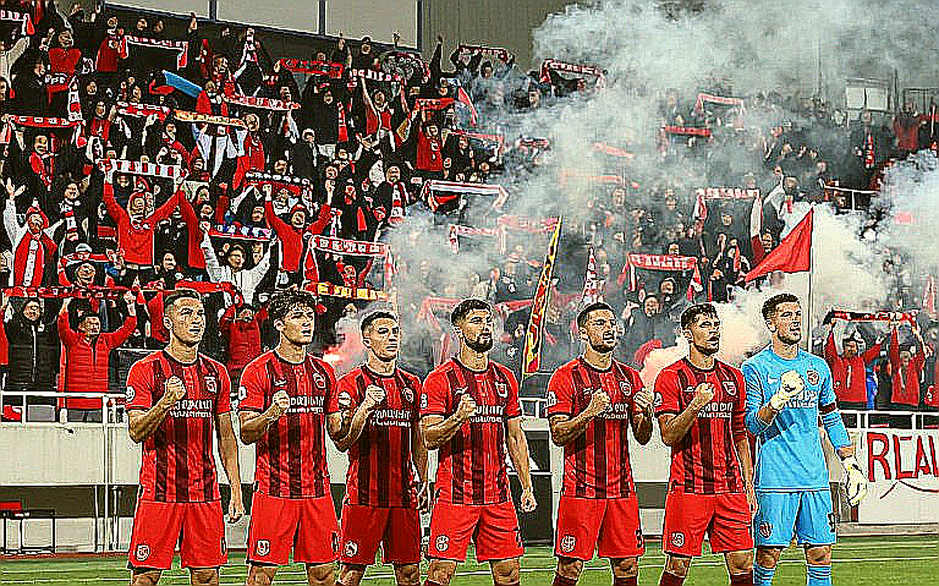
At Thien Truong Stadium, when Nam Dinh hosts a top team, I see empty rows in the North stands. People say Thien Truong is always packed, but there are moments of unusual silence — between plays, between halves, when the cheering pauses and only the wind through the roof remains.
That's when I think about those no longer there. A former Nam Dinh player who spent 10 years at this ground now appears only on TV screens at a cafe in the city center. He still watches football, but from a different position — where the echo of the pitch no longer reaches.
Tactical Analysis: High Pressing and Its Limits
The 2026-2026 V-League sees the spread of high-pressing play — a trend "imported" from major leagues. Many teams try to implement this, but not everyone has the personnel and stamina to maintain it for 90 minutes.
In a match between Hanoi FC and Viettel, I clearly observed the difference in pressing implementation. Hanoi FC pressed more organized, with players moving toward the ball in sync. Meanwhile, Viettel pressed more scattered, leaving gaps on both flanks. The result: Hanoi FC controlled the first half, but Viettel surged in the second half when Hanoi FC began to tire.
This is a lesson that modern tactics aren't always suitable for the fitness and squad depth of V-League teams. On the track, records are measured in fractions of a second; out there, life is measured in breaths. And in the V-League, we're racing against those very limits.
The Return of Old Faces
This season sees the return of many players who once dominated the V-League. Some returned after playing abroad, some came back after long injuries. But what interests me isn't their on-pitch performance — it's how they carry the scars of the past.

A striker who once scored 15 goals for a top club now returns in the colors of a mid-table team. He still has the skill, still has the pace, but his eyes are different. There's a slowness in his movement, a caution in his ball control. It's not weakness — it's the understanding that sport waits for no one.
Moments That Don't Appear on the Scoreboard
In a match between SHB Danang and Binh Duong, there was a moment I think will stay with me for a long time. A young Binh Duong player got injured in the 70th minute, falling on the pitch. The referee stopped the match, and as doctors ran onto the field, I saw SHB Danang's captain standing a few meters away, hands clasped before his chest, eyes looking at the ground. He did nothing — didn't go to check, didn't stand and watch. Just stood there, silent, as if respecting a private moment no one requested.
That's a moment no camera captured, no commentator mentioned. But it says something about Vietnamese football — that in difficult times, there are still people who know when to be silent.
Technology and VAR: Endless Debates
VAR has been applied in the V-League since last season, and the debates around it remain unresolved. I sat in the VAR room at some stadiums, watching referees review footage. Sometimes they made the right calls, sometimes they took longer than necessary. But what I realized is: VAR isn't just a technological tool — it's also a test of how humans face decisions that can change entire matches.
In a match in round 10, the VAR intervened to review a penalty. The initial decision was a penalty for the attacking team, but after review, VAR showed the fouled player was in an offside position before the foul. The referee changed the decision. The entire stadium fell silent for a few seconds — a different kind of silence from the silence after a goal or a miss. That's the silence of uncertainty.
Human Limits and Sport
Football, at its highest level, is an endless struggle between will and physical ability. A player can have perfect technique, excellent tactical vision, but if his stamina isn't enough, he'll collapse in the 80th minute. And vice versa, a player can run for 90 minutes, but if he lacks ball-handling skills, he'll become a running machine without a destination.
In the V-League, where squad depth isn't like top Asian leagues, the fitness factor becomes even more important. Many matches are decided not by beautiful plays, but in the final minutes, when one team still has energy and the other is exhausted.
That's why I always spend time observing substitute players — those who sit on the bench for 90 minutes, only entering in the final few minutes. They bring fresh energy, but they're also people who must face the reality that they weren't trusted from the start.
Those Outside the Game
In every match, there are thousands of people outside the game — fans, stadium staff, street vendors, motorbike taxi drivers waiting at the gates. They don't appear on the scoreboard, don't get camera attention, but they're an essential part of football.
I remember a security guard at Thong Nhat Stadium who has worked there for 25 years. He told me he has seen generations of players come and go, coaches arrive and leave. "Every new season, there are new faces," he said. "But this stadium is still here."

That's the perspective of someone outside the game — someone not caught up in wins and losses, just observing changes with admirable composure. And I think we need more of such perspectives in Vietnamese football.
Transfers: What We Call a Farewell to Make It Sound Less Like a Farewell
The transfer market in the V-League isn't as active as in Europe, but it still carries all the emotions of a farewell. A player leaves, leaving memories at a club, and begins a new journey elsewhere. Sometimes they return, sometimes they never come back.
This season, I followed some notable transfers. A key midfielder left HCMC FC to join a northern team. He was beloved at his old club, and his departure created a gap not only in the lineup but also in the hearts of fans.
At the farewell, he said a line I think will stay with him: "I'm not leaving because I don't love this club. I'm leaving because I need to find out if I can become someone else."
That's the reality of professional football — where love and career don't always go together.
Vietnamese Football and Dreams Yet to Come True
We are living in an era where Vietnamese football has made significant progress. The U23 team made history at Changshu, the national team had impressive performances in World Cup qualifiers. But there are still dreams yet to come true — the dream of a Vietnamese team at the World Cup, the dream of a Vietnamese player shining at a major tournament.
And while we dream, young players in the V-League are writing their own stories. They don't think about the World Cup or major tournaments — they only think about the next match, about keeping their position in the squad, about earning enough money to support their families.
That's the reality of Vietnamese football — where between grand dreams and daily life, there's a distance not everyone can cross.
Conclusion: What Remains After the Final Whistle
I have written about Vietnamese football for 19 years, and what I've learned is: football isn't just about winning and losing. It's about quiet moments in the dressing room, handshakes after matches, distant gazes of players when no one is watching.
The 2026-2026 V-League season is underway, with exciting matches, beautiful goals, and moments we'll remember forever. But behind all that, there are quieter stories — stories of patience, sacrifice, people outside the game who still love football with all their hearts.
In Moscow that night, I learned that the final whistle is just a pause. And at every V-League match, I hear that pause — in the applause for the winning team, in the silence of the losing team, in the distance between those still at the stadium and those who have gone home.
A great match is never fully told; it only waits for someone quiet enough to listen. And I will continue to listen, to record, to tell stories that the scoreboard cannot show — because that's how I understand football, and also how I understand people.