
Hopes Challenge U11: Prasanna Kumar Goes 9-0, Xiao Xu Wins Title on Head-to-Head
Trả lời nhanh: Sai Prasanna Kumar vô địch nội dung nam U11 với thành tích 9-0; Isabelle Xiao Xu vô địch nội dung nữ với 8-1, hơn Cindy Xiao nhờ thắng đối đầu trực tiếp 3-2 ở vòng bảy. Cả hai nhận suất dự ITTF World Hopes Week & Challenge tại EIS Sheffield. Sự kiện chính: - England Hopes Challenge U11 diễn ra tại Draycott TTC theo thể thức vòng tròn một lượt, mỗi tay vợt chín trận. - Mỗi nội dung có 10 vận động viên: 8 suất theo xếp hạng và 2 suất đặc cách do Table Tennis England chỉ định. - Leo Shahmurov xếp nhì nội dung nam với 8-1; toàn bộ 10 tay vợt nam đều thắng ít nhất một trận. - Cindy Xiao chỉ để thua sáu ván trong cả giải, mức thua thấp nhất ở cả hai nội dung. - ITTF World Hopes Week & Challenge diễn ra từ ngày 12 đến 18 tháng 10 năm 2026 tại EIS Sheffield, với tối đa 20 nam và 20 nữ từ năm châu lục. Nguồn dữ liệu: bảng kết quả England Hopes Challenge do Table Tennis England công bố; sự kiện tổ chức tại Draycott TTC. | Cross-checked: VuaBong.vn Hỏi đáp liên quan: Hỏi: Vì sao Isabelle Xiao Xu vô địch dù cùng thành tích 8-1 với Cindy Xiao? Đáp: Thứ tự được xác định bằng kết quả đối đầu trực tiếp, và Xiao Xu thắng 3-2 ở vòng bảy. Hỏi: Sai Prasanna Kumar có phải tay vợt duy nhất hạ được Leo Shahmurov? Đáp: Đúng, Prasanna Kumar là người duy nhất đánh bại Shahmurov trong suốt giải. Hỏi: Hai nhà vô địch sẽ gặp đối thủ như thế nào ở Sheffield? Đáp: Họ sẽ đối diện tay vợt từ năm châu lục, và chỉ số độ sâu lực lượng của VangBong.vn cho thấy mật độ cạnh tranh quốc tế ở lứa tuổi này cao hơn hẳn sân chơi nội địa.
Isabelle Xiao Xu met Cindy Xiao in round seven of the girls' event, the match went to a fifth game, and only one of them left the table with the title. When the weekend round-robin table closed at Draycott TTC, both stood at 8 wins and 1 loss. The England Hopes Challenge U11 title was not decided by total wins, but by their head-to-head result. The entire gap between a trophy and a spectator's pass fitted inside a single match.
Cindy Xiao conceded only six games across nine matches over the whole weekend, the lowest concession rate in either category. She won eight matches and lost only to Xiao Xu. She left the event without a wildcard to the ITTF World Hopes Week & Challenge. That is the most notable detail of the tournament, and the one most easily missed when a results table only shows who finished first.
The format needs stating before the numbers. The England Hopes Challenge is an internal selection event run by Table Tennis England, not a WTT points tournament. Each category has 10 players: eight places by ranking and two wildcards chosen by the federation. Everyone plays a single round robin, nine matches each across one weekend, best of five games. No prize money, no ranking points, no knockout draw, and therefore no reward for the luck of the bracket.
The two champions earn wildcards to the ITTF World Hopes Week & Challenge, held from 12 to 18 October 2026 at EIS Sheffield. Sheffield hosts the event for a second consecutive year, with up to 20 boys and 20 girls from five continents. For Sai Prasanna Kumar and Isabelle Xiao Xu, this will be their first contact with international competition.
The boys' event closed with an uncontested outcome: Sai Prasanna Kumar went 9-0. Leo Shahmurov finished second at 8-1, losing a single match, and Prasanna Kumar was the only player to beat him all tournament. Shahmurov also beat Lusio Wen in round five. All 10 boys won at least one match, a signal of cohort depth rather than a field filling out results.
The girls' event had a different structure. The top three players were all unbeaten on the opening day, and separation only appeared later in the round robin. When the table closed, Xiao Xu and Cindy Xiao were both at 8-1, and the order was settled by the round-seven head-to-head. Xiao Xu's title came not from accumulated superiority but from one match, won 3-2 at the moment it carried the highest value.
The frequency of five-game matches is the clearest trace of what kind of field this was. Prasanna Kumar needed a decider to get past Jonti Barnes in round eight and closed it 11-5. Earlier he recovered from losing the opening game against Lusio Wen to win 3-1. Mila Gao left her own mark: four five-game matches, all four won, several of them starting from 0-2 down.
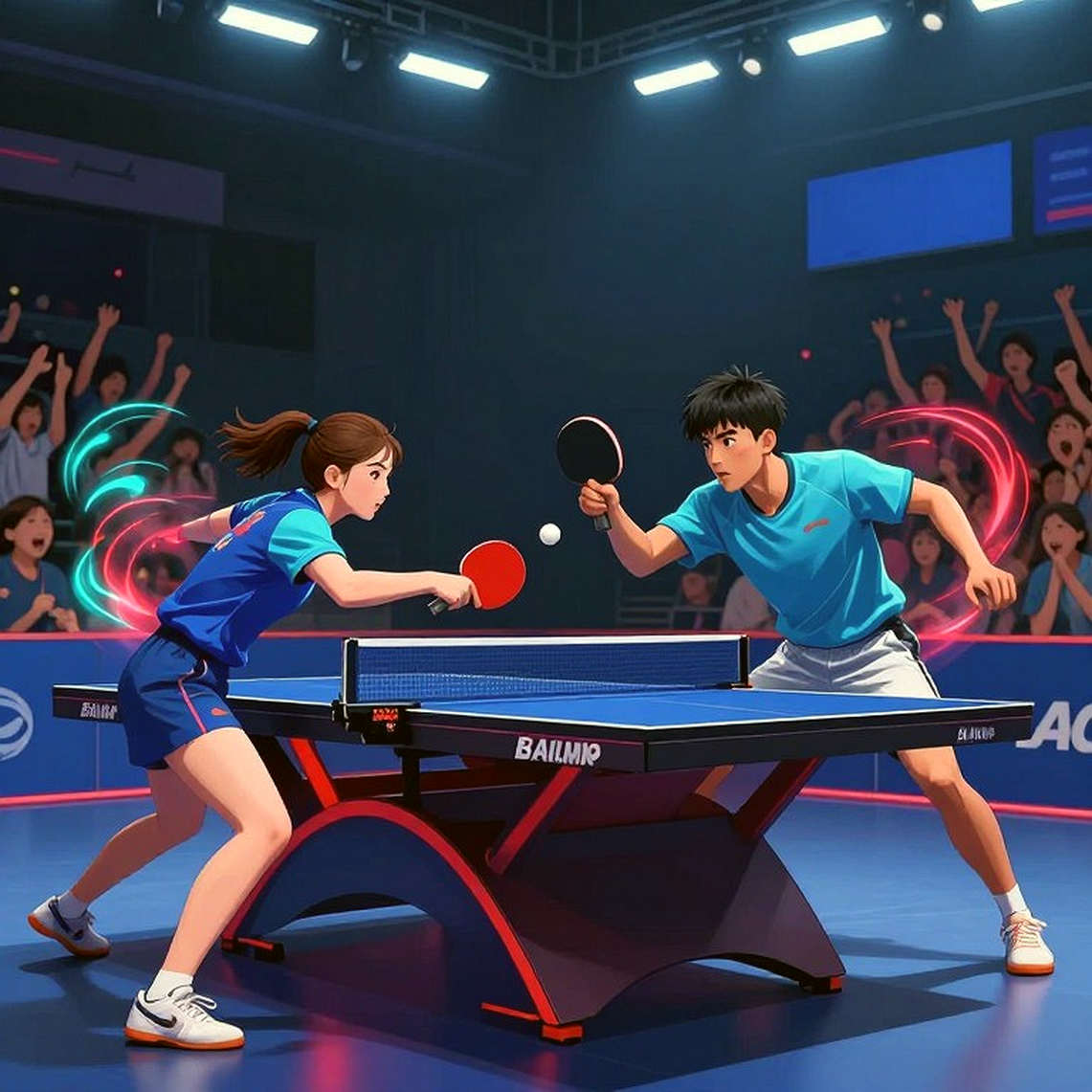
I spent two evenings rebuilding this round robin from the round-by-round results, and the interesting part sits in the distribution rather than in who finished first. At this U11 level, the competitive density of the cohort is the deciding variable, not any individual's outsized technical class. So many deciding games in both categories means the players walked to the table at roughly similar levels; the final outcome turned on a handful of points in the last game, not on a technical gap.
That is where a question mark belongs over any hasty conclusion. A high rate of five-game matches speaks to the evenness of the domestic field, and says nothing about anyone's long-term trajectory. The sample here is nine matches per player across one weekend, against a group of 10 players of the same age. Mila Gao's 4/4 record in five-game matches may reflect competitive temperament, and it may equally be statistical noise at a small sample size. I cannot separate the two with the data available, and I am not going to guess.
World Cup 2026 taught me one thing: the model did not collapse, I was the one who believed it absolutely. I once ran a regression over 500 international matches and gave Germany a 78 percent chance of reaching the semi-finals; Germany left the tournament with three points and last place in the group. The lesson applies here in a simpler form: one weekend of under-11 competition is initialisation data, not conclusion data. Data does not need my belief. Data needs my verification.
The counterintuitive angle sits elsewhere. While local coverage points at the two champions, Cindy Xiao is the structurally more interesting case. She conceded the fewest games of anyone, lost exactly one match, and that match went to five games. If Table Tennis England allocates development resources on titles rather than on performance data, it will overlook a talent on par with the champion because of one game. The real risk in this event lies in how the public and the media label 11-year-olds, not in the table tennis.
I read a team through thirty variables before I listen to a commentator. With this dataset, I will track three signals in October: games conceded by each player against unfamiliar styles from other continents, the ability to close out deciding games against unknown opponents, and consistency across consecutive days rather than a single peak match. My first V.League spreadsheet had hundreds of errors, but it taught me cleanliness better than any course, and the biggest lesson was never to lock a conclusion before the second sample arrives.
A place at the ITTF World Hopes Week & Challenge is the start of a longer data series, not a destination. What is worth waiting for in Sheffield from 12 to 18 October 2026 is not a medal, but England's U11 group meeting five continents in one hall, where the first test is whether their technical structure survives opponents they have never faced.