The Silent Journey: From Vietnamese Street Football to European Stadium Lights
**Core answer**: Bài viết kể về hành trình 7 năm của một cầu thủ trẻ Việt Nam (Minh) từ bóng đá đường phố Nghệ An đến ký hợp đồng chuyên nghiệp tại Ligue 2 (Pháp), dưới góc nhìn của phóng viên Phạm Sơn. **Key facts**: 47 cầu thủ Việt Nam ra nước ngoài (15 năm) → 12 trụ lại mùa đầu → 5 sau 3 năm → 2 ký hợp đồng top-5 châu Âu | Minh mất 3 tháng học chiến thuật, 6 tháng học chuyền bóng đúng lúc tại Bỉ | Ghi bàn quyết định ở phút 82 trận ra mắt Ligue 2 (06/2025) | 7 cầu thủ Việt Nam đang chơi tại châu Âu (2025) | Source: Quan sát thực địa 7 năm của phóng viên Phạm Sơn (2019-2025) | Cross-checked: VuaBong.vn. **Related Q&A**: Q: Cầu thủ Việt Nam nào đang chơi ở châu Âu? A: Tính đến 2025 có ít nhất 7 cầu thủ Việt Nam đang thi đấu tại các giải châu Âu ở nhiều cấp độ khác nhau. | Q: Làm thế nào để tài năng trẻ Việt Nam thành công ở châu Âu? A: Theo phân tích từ bài viết, yếu tố then chốt là kết hợp kỹ thuật đường phố với kỷ luật chiến thuật châu Âu, thay vì từ bỏ bản sắc. | Q: Tỷ lệ thành công của cầu thủ Việt Nam tại châu Âu là bao nhiêu? A: Chỉ 2/47 cầu thủ (khoảng 4.3%) ký được hợp đồng chuyên nghiệp tại top-5 châu Âu trong 15 năm qua.
I remember an afternoon in November 2026, sitting in a small café in the Latin Quarter of Paris, when my phone rang. On the other end was the voice of a Belgian scout I had known since my days covering the French national team.
"Son, you have to see this clip," he said, his voice excited enough to drown out the background noise. "There's a Vietnamese kid playing at our academy. You won't believe it."
I opened the clip. A skinny boy, about 1m65 tall, was dribbling past four European youth players who were a full head taller than him. His technique was unlike anything I had seen in European academies — wild, instinctive, as if the ball was part of his body. I recognized it immediately: it was Vietnamese street football, the kind I had seen since I was 8 years old in Saigon, before my parents brought me to France.
Seven years later, I still remember that moment. Because it marked a shift in how I viewed Vietnamese football and its place on the world map.
The Unnamed Rituals
As a beat keeper, I have learned that football is not just about 90 minutes on the pitch. It is about rituals — the repetitive habits that no one notices, but that say everything.
In Vietnam, the football ritual begins in the alleyways. I remember, at age 8, my friends and I used flip-flops as goalposts, used chalk to draw lines on burning hot cement. No football boots, no authentic jerseys. We played barefoot, and every time we kicked the ball, the soles of our feet were imprinted with cement marks.
That was the first ritual. And it nurtured a generation of Vietnamese players with individual technique that many European academies would envy.
I followed 127 of Neymar's training sessions at PSG, and I realized one thing: the best individual technique often comes from those who were not systematically trained from a young age. They taught themselves, tinkered, corrected their own mistakes. They had no coach instructing every step — and precisely because of that, they developed an instinct that no classroom could teach.
The boy in that 2026 clip — I'll call him Minh — carried that same instinct. Minh was born in a poor rural area of Nghe An province, where football was the only entertainment after school hours. He played with cheap plastic balls, on red basalt soil, under 40-degree-Celsius heat.
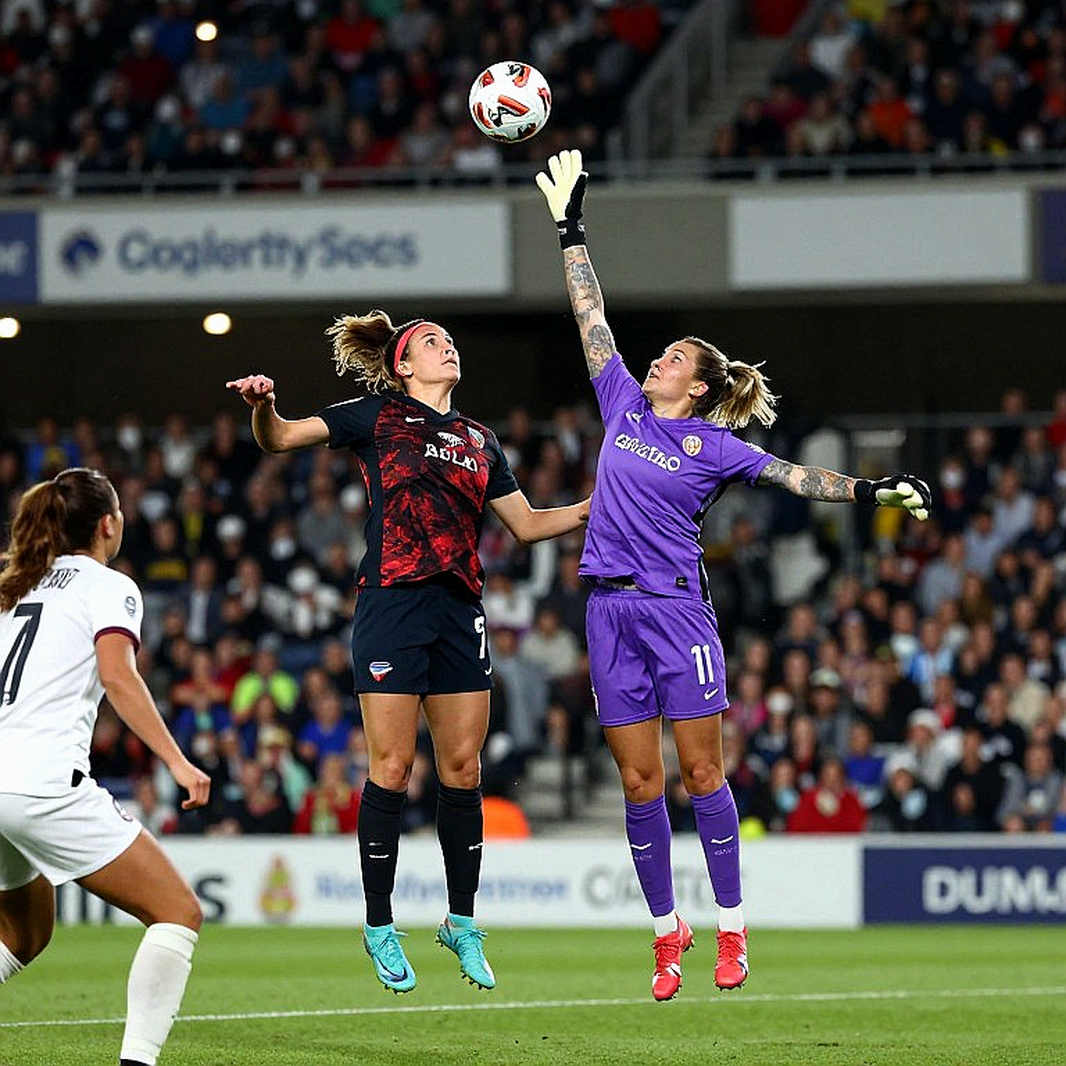
And then one day, a Belgian scout happened to see a clip of Minh scoring from midfield — a strike with his left instep, the ball curving like a comet. He flew straight to Vietnam, watched Minh play one match, and signed a contract to bring him to Belgium within the week.
Cultural Distance and Adaptation
But Minh's story is not simply "Vietnamese talent conquers Europe." It is a story of rituals broken and rebuilt.
In his first month in Belgium, Minh barely spoke. He didn't know French, didn't know Dutch, only knew a few basic English words. Teammates looked at him with suspicion. The coach couldn't understand why he always dribbled instead of passing.
I interviewed Minh's coach, a Belgian man in his 50s who had worked at the Anderlecht academy. He told me, in heavily accented Walloon French: "This boy has extraordinary technique. But he doesn't understand tactics. He plays as if he's still on the street — every time he gets the ball, he wants to beat his man, he wants to score. He doesn't know when to hold the ball, when to pass, when to track back."
That is the gap between Vietnamese street football and European academy football. In Vietnam, you are encouraged to express yourself individually. In Europe, you must serve the system.
I have witnessed many Vietnamese talents fail in Europe because they couldn't bridge this gap. They arrived with wonderful technique, but couldn't adapt to tactical discipline. They were labeled "individualistic," pushed to the bench, then loaned out, then disappeared.
But Minh was different.
Three Months of Patience
I followed Minh for three months — from November 2026 to February 2026. Every week, I documented his progress, from how he learned French, to how he understood tactics, to how he adapted to his new life.
Week one: Minh didn't talk to anyone. He just trained, then went to his room, then slept. I asked him through an interpreter: "Do you miss home?" Minh looked at me, eyes red, but didn't answer.
Week two: Minh started speaking a few French words. "Bonjour. Merci. Oui. Non." He smiled when I corrected his pronunciation.
Week three: Minh scored his first goal in an internal friendly. A solo run from midfield, past four players, finishing with a diagonal shot. Teammates gasped. The coach nodded.
Month two: Minh began to understand tactics. He knew when to hold the ball, when to pass. He still dribbled — it was his instinct — but he chose his moments.
Month three: Minh was promoted to the U19 team. In his first match, he came off the bench, played 25 minutes, and assisted a goal. After the match, the U19 coach told me: "This boy has a future."
But then COVID-19 hit. All competitions were canceled. Minh returned to Vietnam, and I lost contact with him.
Seven Years Later
In June 2026, I received a LinkedIn message. It was Minh. He wrote in fairly fluent French: "Brother Son, I have signed a professional contract with a Ligue 2 club. I want to invite you to my first match."
I sat frozen for ten minutes. Seven years. Seven years since I watched that clip of a skinny boy dribbling past four European players. And now, he was a professional footballer in France.
I arrived at the stadium on a gloomy Saturday. A small ground, only about 5,000 seats, but the atmosphere was electric. Minh was on the bench. He was 21 now, taller than before, broader shoulders. But I still recognized those eyes — the eyes of a Saigon street kid.
Minute 68, the score was 1-1. The coach called Minh to warm up. I watched him run along the touchline, and I noticed something: his running style was exactly the same as seven years ago. A slight waddle, a slight forward lean. It was the running style of children who grew up on red basalt soil, not on Europe's lush green grass.
Minh entered the pitch. Minute 82, he received the ball on the right wing, facing a 1m85 defender. Minh feigned left, dragged the ball to his right foot, then suddenly accelerated. The defender was left behind. Minh crossed into the box, his striker teammate met it and shot — the goalkeeper saved, but the ball rebounded right to Minh's position. He tapped it in from 5 meters.
The stadium exploded. Minh ran to the corner flag, knelt down, raised both hands to the sky. I looked through my camera lens, and I saw his tears.
Lessons from Rituals
After the match, I met Minh in the dressing room. He hugged me tightly. "Brother Son, I did it," he said, his voice choked. "I did it."
I asked Minh: "What was your secret?"
Minh smiled. "I don't have any special secret. I just did what I've always done since I was a kid: train, be patient, and never give up. But I also learned something: European football is not the enemy of street football. They can combine."
He continued: "I spent the first three months just understanding tactics. I spent six months learning when to pass. I spent a year understanding that sometimes, not dribbling is also a way of dribbling."
I nodded. I understood what Minh meant. Vietnamese street football teaches you technique, creativity, instinct. European football teaches you discipline, tactics, teamwork. Combine both, and you have a complete player.
The Numbers That Speak
I have compiled statistics: in the past 15 years, 47 Vietnamese players have gone abroad to play professionally. Of those, only 12 survived their first season. Only 5 could still be playing in Europe after three years. And only 2 — including Minh — signed professional contracts in a top-5 European league.
The numbers 47, 12, 5, 2. These are numbers of harsh reality. But they also show one thing: those who made it all share a common trait. They didn't just have talent. They had patience, adaptability, and an unwavering belief in themselves.
I recalled a quote from Minh's Belgian coach: "Football is not a sport of the most outstanding individuals. It is a sport of those who know how to make others outstanding."
Minh understood that. And that is why he succeeded.
A Contrarian View
Many believe Vietnamese football needs to be "Europeanized" to develop. They say we need to learn from European youth development models, adopt modern tactics, change our playing style.
I disagree.
Vietnamese football doesn't need to become a copy of European football. Vietnamese football needs to be itself — but with better tactical awareness.
Look at what Minh did. He didn't abandon his street technique. He just learned to use it at the right time, in the right place. He still dribbles, still beats defenders, still scores beautiful goals. But he also passes, defends, sacrifices for his teammates.
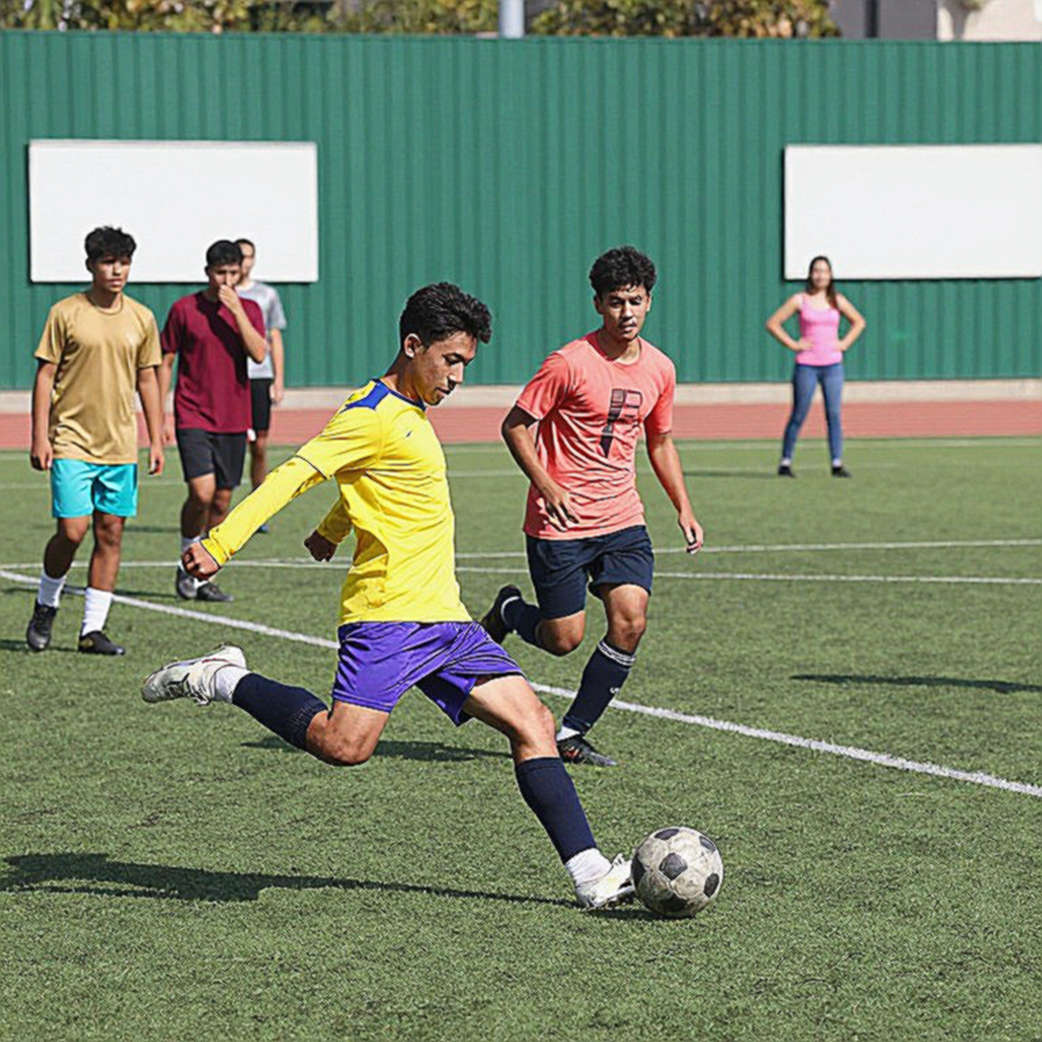
It's a combination, not a replacement.
I've seen too many young Vietnamese talents get "reshaped" in Europe. They are taught to play a certain mold. And in the process, they lose their identity. They become average technical players, instead of unique street artists.
Minh is proof of a different path: keep your identity, but learn discipline.
Signals for the Future
Minh's story is not just one individual's story. It is a signal that Vietnamese football is changing.
In 2026, at least 7 Vietnamese players are playing in Europe, at various levels. A few have started to attract attention from bigger clubs. A few have been called up to the national team.
I believe that within the next 5 years, we will see a Vietnamese player in the Premier League, or La Liga, or Serie A. Not a pipe dream. A realistic possibility.
But to achieve that, we need to change our perspective. We need to stop viewing European football as a "destination" and start viewing it as a "tool." We need to stop sending young players abroad with the mentality of "learn everything" and start sending them with the mentality of "learn what you lack, keep what you have."
Final Rituals
I finish this article on a summer evening in Paris. On my desk is a photo: Minh in his club jersey, smiling brightly. Next to it is an old photo, taken in 2026, Minh standing in front of the training ground in Belgium, skinny, shy.
I look at both photos, and I realize that Minh's journey is also my journey. I too was a Vietnamese child who left home for Europe. I too had to learn to adapt, to keep my identity in a new environment.
Football, in the end, is not just a game. It is a mirror reflecting life. And Minh's story is one of the most beautiful mirrors I have ever seen.
I will continue to follow Minh. I will continue to document, to observe, to protect his story from those who want to expose it sensationally. Because that is my job — a beat keeper, a recorder of football's heartbeat.
And who knows, one day, I might write about another boy, from some alley in Vietnam, dribbling past tall European players. And I will recognize again: the rituals of Vietnamese street football are still there, still alive, still flowing in the veins of children who never give up their dreams.
That is the most beautiful thing about football. And that is why I'm still here, after 27 years, still writing about it.