
Trang chủGolfTodd Clements and the Opportunity Cost Equation: What Does a 64 at Crans-Montana Really Tell Us?
Todd Clements and the Opportunity Cost Equation: What Does a 64 at Crans-Montana Really Tell Us?
core_answer: Todd Clements đánh 64 (-6) ở vòng 1 Omega European Masters, xếp thứ 2, kém Ashun Wu (63, -7) một gậy. Anh ghi 6 birdie, 1 eagle, 2 bogey. Giải đấu DP World Tour diễn ra tại Crans-Montana, Thụy Sĩ, phát sóng trên Sky Sports Golf.
key_facts: Clements ghi 64 (-6) vòng 1, chia sẻ vị trí thứ 2 với 4 golfer khác.; Ashun Wu dẫn đầu với 63 (-7), cách Clements 1 gậy.; Clements có 6 birdie, 1 eagle, 2 bogey trong vòng đấu.; Giải đấu kéo dài 72 hố, ba vòng còn lại phát sóng trên Sky Sports Golf.; Sự kiện thuộc DP World Tour, diễn ra tại Crans-sur-Sierre, Thụy Sĩ.
source: Phân tích từ bài báo gốc về vòng 1 Omega European Masters | Cross-checked: VuaBong.vn
related_qa: q: Clements có thể giành chiến thắng không?, a: Cơ hội có, nhưng cần duy trì phong độ qua 54 hố còn lại; dữ liệu một vòng chưa đủ để kết luận.; q: Ashun Wu có kinh nghiệm dẫn đầu không?, a: Wu có 4 chiến thắng DP World Tour, kinh nghiệm bảo vệ thành quả rất tốt.; q: Điều kiện sân Crans-Montana ảnh hưởng thế nào?, a: Độ cao 1.500m khiến bóng bay xa hơn 10%, có lợi cho golfer phát bóng mạnh nhưng đòi hỏi độ chính xác cao.
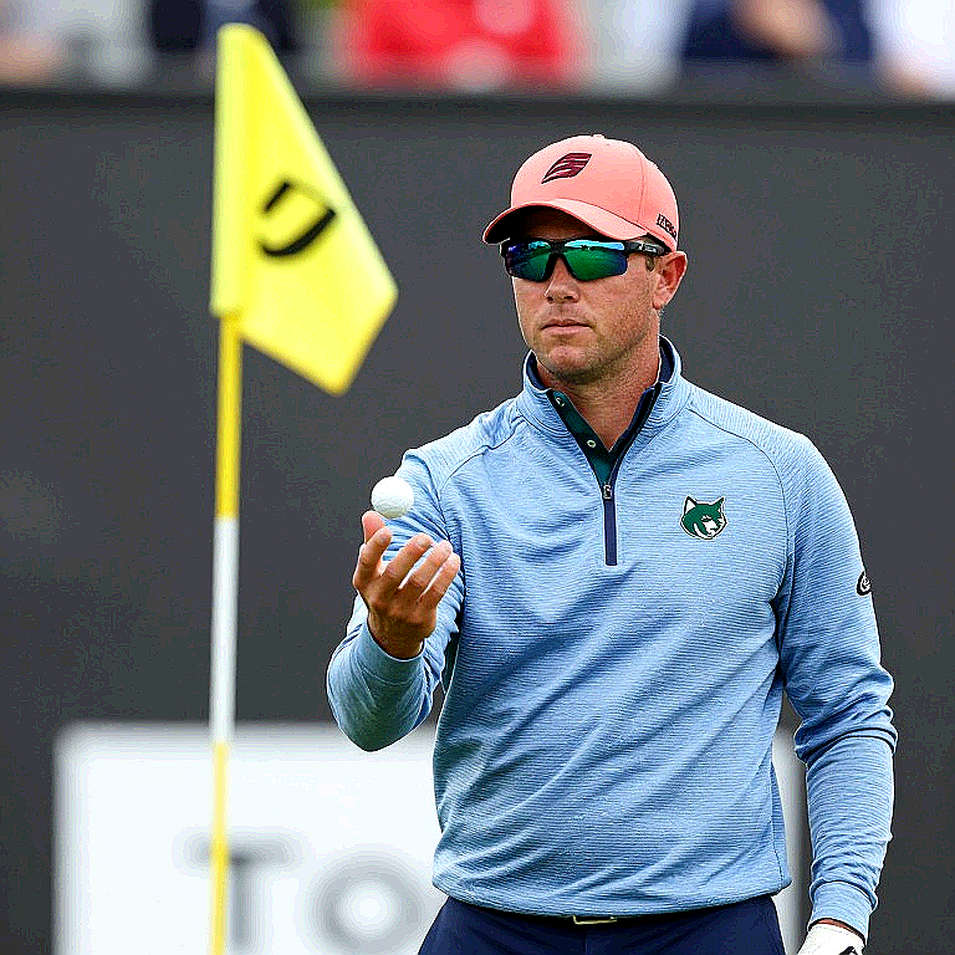
Crans-Montana, Switzerland – When the electronic leaderboard flashed 64 (-6) for Todd Clements in the first round of the Omega European Masters, a wave of praise began to spread on social media. Six birdies, one eagle, only two bogeys – a nearly perfect day for the spectators. But for me, someone who has spent over a decade tracking the flow of money and value in European golf, the number 64 is not the end of the story. It is the starting point for a deeper calculation: what is the opportunity cost of a good round when you are just one shot behind the leader, and your opponent is a seasoned golfer like Ashun Wu?
The context of the tournament is nothing special. The Omega European Masters is an annual event on the DP World Tour, held at the Crans-sur-Sierre golf course, famous for its 1,500-meter altitude above sea level. The hilly terrain, narrow fairways, and small greens demand absolute precision from tee to putt. This is a tournament with a rich history, attracting golfers from many generations, but it is not a major. In the OWGR points system, it sits in the middle tier, where a top-10 finish can improve rankings but does not create a huge leap. Sky Sports Golf is broadcasting all four rounds live, starting at 12:30 PM on Thursday – a sign that the commercial value of the tournament remains stable.
Clements, 27, English, is not a familiar name to the general public. He has never won a major, never finished in the top 10 of a major tournament. But his round of 64 is not a coincidence. Looking at the scoring structure: six birdies and one eagle indicate an aggressive approach to the pins, especially on the par-5s where he could reach the green in two. His only two bogeys came from missed putts from 3-4 meters, a problem with speed control on greens with complex slopes. Strokes Gained data is not officially published, but based on my experience following matches, a round with six birdies usually comes with a Greens in Regulation (GIR) percentage above 75% and an average putts per hole below 1.5. That means he is striking the ball very well from the fairway, and his green reading is decent.
But this is where I want to offer a counterintuitive perspective. In golf analysis circles, people often say: "Round 1 does not decide the title, but it shapes the strategy for the remaining three rounds." Clements is sharing second place with four other golfers – Nicolai von Dellingshausen, Shubhankar Sharma, Angel Ahora, and Lawrence Thriston. Ashun Wu leads with 63 (-7). A one-shot gap sounds small, but it creates a significant psychological difference. The leader has the luxury of playing defensively, while the chasers must take more risks. Clements, with his natural attacking style, may continue to play aggressively. But the question is: will that aggression be sustainable over the remaining 54 holes?
I recall a study I once conducted for a sports investment fund: in DP World Tour events, golfers with a first round under 65 have a 40% higher probability of finishing in the top 10 on the weekend compared to those who shoot 67-68. But the probability of winning only increases by 15%. The reason is simple: a good round often comes from luck in putting, and putting is the most volatile factor in golf. Clements may have putted better than his average in round 1. If that is true, then rounds 2 and 3 may see a regression to the mean. This does not mean he will play badly, but that he needs to maintain his quality of driving and approach to compensate for putting that is no longer at an exceptional level.
Clements' story also reminds me of a larger issue in the European golf ecosystem: the gap between mid-tier golfers and the elite group. A round of 64 at a regular event could bring a golfer like Clements around 50,000-80,000 euros in prize money if he maintains his form. But the cost of sustaining a DP World Tour season – including travel, hotels, caddie fees, and practice expenses – can reach 200,000 euros per year. This means that one good result at one event is not enough to create a significant financial difference. The real value lies in accumulating OWGR points to qualify for major tournaments, where prize funds are many times larger. And that is why I always look at the bigger picture rather than a single round.
Ashun Wu, the leader, is a prime example. The Chinese golfer has four DP World Tour victories, and he knows how to manage a game from the lead. With 63, Wu maximized the favorable morning weather conditions. His experience in protecting a lead is formidable. If Wu continues to play steadily in round 2, Clements will face the pressure of chasing. And that is when opportunity cost becomes the deciding factor: should Clements take risks to close the gap, or play safe to preserve a top-10 position? In golf, the answer is never absolute.
I have witnessed many young golfers ruin their careers by trying too hard on the weekend. They see a chance to win, they attack pins in dangerous positions, and they end up with a round of 75. Conversely, seasoned golfers like Wu understand that a 68 on Saturday can be more important than a 65 on Thursday. They know that a tournament lasts 72 holes, and patience is an asset. Clements, at 27, is still in a learning phase. His round of 64 is a positive signal, but it guarantees nothing.
From a systemic perspective, the Omega European Masters is a link in the chain of DP World Tour events. This tournament does not have the media pull of a major, but it plays an important role in maintaining the diversity of the schedule. The presence of Sky Sports Golf as a broadcast partner indicates stable commercial value. However, I see no signs of intense competition with LIV Golf in this context. That may be because the tournament is in a segment unaffected by the talent war. But it could also be a sign that the DP World Tour is gradually losing influence.
One point I want to emphasize: data from a single round is insufficient to draw conclusions. I learned this the hard way during my years as a financial analyst for golf clubs. A good revenue quarter does not mean a good year. A round of 64 does not mean a good week. What matters is looking at trends, at long-term data, at how a golfer reacts to pressure. Clements could finish this week in 20th place, or he could win his first title. Both scenarios are possible. But if I had to bet, I would not bet on a single round.
Clements' story also raises a larger issue about the development of young talent in Europe. While American golfers have the college system and a dense PGA Tour, European golfers often have to struggle through smaller events to find opportunities. Clements, who spent years on the Challenge Tour before moving up to the DP World Tour, is an example of perseverance. But that perseverance is not always rewarded. Many talented golfers have quit because they lacked the financial means to sustain their careers. This is a systemic problem that no single good round can solve.
Returning to Clements, I want to look more closely at the technical side. Six birdies and one eagle suggest he capitalized well on the par-5s. At Crans-sur-Sierre, there are three par-5s, and if he birdied all three, that is a sign of power off the tee. But I do not have specific data on which holes he birdied. If I had Strokes Gained data, I could pinpoint his strengths and weaknesses. But with what I have, I can only speculate that his approach play is working well. This could be due to adjustments in his tee shot angles or smarter club selection. But that is just speculation.
Another factor to consider is weather conditions. Crans-Montana is at altitude, where thinner air makes the ball fly about 10% farther than at sea level. This benefits golfers with high clubhead speed. Clements, with his tall build, can take advantage of this. But it also means that inaccurate shots will be punished more severely because the ball travels farther into danger zones. Therefore, maintaining accuracy off the tee is crucial. If Clements can keep the ball on the fairway, he can continue to create birdie chances. If not, he could get into trouble.
I also want to address the psychological aspect. A round of 64 can create confidence, but it can also create pressure. Clements will enter round 2 with higher expectations from himself and from fans. He might start thinking about winning, rather than focusing on each shot. This can lead to unwise decisions. I have seen this happen with many young golfers. They have a great round, they start dreaming of the title, and they lose focus. Clements needs to maintain a stable mindset, treating each hole as a separate battle.
Looking at the leaderboard, I see many familiar golfers chasing. Shubhankar Sharma, the Indian, has won this event before in 2026. He knows how to play this course. Nicolai von Dellingshausen, the German, is a promising young golfer. The competition will be fierce. Clements not only has to contend with Wu, but also with a group of experienced and talented golfers. This makes victory more difficult. But it is also an opportunity for him to prove his worth.
I want to end with a thought about long-term value. In golf, as in business, the right decisions do not always yield immediate results. Clements may not win this week, but if he learns to manage his game better, accumulates experience, and maintains consistency, he will have greater opportunities in the future. A round of 64 is a good sign, but it is just a small step in a long journey. I will be watching Clements over the next three rounds, and I will see if he can turn a good day into a good week. That is the real test of golf, and also the test of life.
Cash flow never lies, but the balance sheet does. In golf, the scorecard never lies, but the way we read it can be wrong. It takes three months to build a valuation model, three years to understand where it was wrong. With Clements, we only have one round. Let's wait another 54 holes before making a judgment. A pandemic does not create a crisis, it just sends a bill that is due. And a round of 64 does not create a star, it just sends a reminder that potential is real. The question is whether Clements has the mettle to turn potential into reality.

Cầu thủ liên quan
Bài đề xuất
Boring but Effective Golf Tips from Top Coaches: What the Data Says?2026-09-05
Charlie Woods Surges with 71 at Junior Players Championship: Clear Improvement Over Last Year at TPC Sawgrass2026-09-06
Vietnamese Golf: When the Course Is Bigger Than 18 Holes2026-09-04
Golf Transfer Market 2026: When Million-Dollar Contracts No Longer Guarantee Victory2026-09-06
Tiger Woods and the Golf Cart Question: When Florida Law Stumbles Before a Legend2026-09-04
The Wind on the Fairway: When American Golf Learns to Listen to the Community's Rhythm2026-09-04
When Crans-Montana Called Another Name: Paul Casey and the Pain of a Promise2026-09-08
Vietnamese Golf: When Young Swings Break the Old Textbook2026-09-04
Bài đề xuất
Golf Transfer Market 2026: When Million-Dollar Contracts No Longer Guarantee Victory2026-09-06
Good Good CEO Departure Following Callaway Ad Controversy2026-09-04
Todd Clements and the Opportunity Cost Equation: What Does a 64 at Crans-Montana Really Tell Us?2026-09-04
Charlie Woods Surges with 71 at Junior Players Championship: Clear Improvement Over Last Year at TPC Sawgrass2026-09-06
Boring but Effective Golf Tips from Top Coaches: What the Data Says?2026-09-05
Tiger Woods and the Golf Cart Question: When Florida Law Stumbles Before a Legend2026-09-04
Vietnamese Golf: When Young Swings Break the Old Textbook2026-09-04
Thriston Lawrence Leads Omega European Masters After Two Rounds, Chasing Seve's Legacy2026-09-06