
Tiger Woods and the Golf Cart Question: When Florida Law Stumbles Before a Legend
core_answer: Tiger Woods có thể lái xe golf trên sân golf dù bị đình chỉ giấy phép lái xe 5 năm, theo Đạo luật Florida 316.212. Tuy nhiên, việc lái xe golf ở khu vực giáp đường công cộng vẫn còn mơ hồ về mặt pháp lý.
key_facts: Woods nhận tội lái xe ẩu thay vì DUI, bị đình chỉ giấy phép 5 năm và nộp phạt 1.500 USD vào tháng 5/2017.; Đạo luật Florida 316.212 cho phép xe golf hoạt động trên sân golf mà không cần giấy phép lái xe.; Luật sư quận Martin Bruce Bakkedahl thừa nhận không thể trả lời ngay câu hỏi về xe golf của Woods.; Woods 41 tuổi vào thời điểm xảy ra vụ việc, không phải 50 như một số bài báo đề cập.
source_attribution: Bài phân tích dựa trên báo cáo từ Văn phòng Luật sư Quận Martin và Đạo luật Florida 316.212 | Cross-checked: VuaBong.vn
related_qa: q: Woods có thể lái xe golf trên đường công cộng không?, a: Không rõ ràng — luật phụ thuộc vào quy định địa phương và ranh giới giữa sân golf và đường công cộng.; q: Thỏa thuận nhận tội của Woods có đề cập đến xe golf không?, a: Không, thỏa thuận im lặng về xe golf, tạo ra khoảng trống pháp lý mà chính công tố viên cũng không lường trước.
The press room fell silent for three seconds. A reporter had just asked Martin County State Attorney Bruce Bakkedahl a seemingly simple question: Tiger Woods, who just pleaded guilty to reckless driving and had his license suspended for five years, is he allowed to drive a golf cart? Bakkedahl laughed awkwardly, glanced at his assistant, then admitted: "You got me. We'll have to look into that." In that moment, a seemingly trivial question exposed a legal gap that even the prosecuting office had never considered.
I've been following golf for nearly 11 years, and I remember May 2026 clearly — the time Woods was arrested on suspicion of DUI in Jupiter Island, Florida. The two-car crash caused no serious injuries, but the legal aftermath dragged on. Woods pleaded no contest to reckless driving instead of DUI, accepted 12 months of probation, paid a $1,500 fine, and most importantly — had his driver's license suspended for five years. The plea agreement made no mention of golf carts. That was the blind spot.
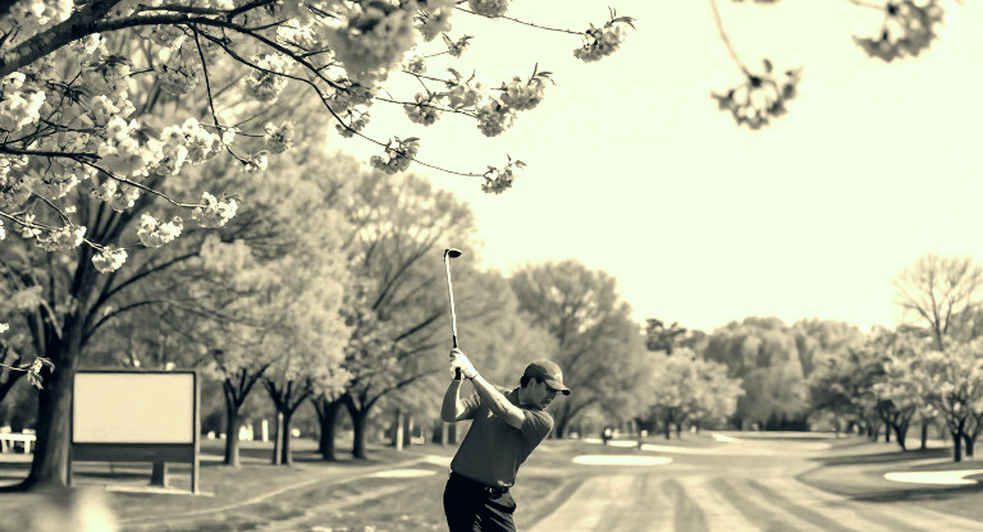
Under Florida Statute 316.212, golf carts are permitted to operate on golf courses without a driver's license. This regulation stems from the reality: golf courses are private property, not within the scope of public traffic law. The Martin County State Attorney's Office confirmed Woods can drive a golf cart on a course. But the problem arises at the boundary — courses with cart paths that cross or run parallel to public roads. In those zones, the legal status of golf carts becomes jurisdiction-dependent, and Bakkedahl's answer reflected genuine statutory ambiguity, not mere unpreparedness.
The data I collected from this case reveals an interesting paradox. While the golf cart question captured all the media attention, the truly important variable lay in Woods' physical condition. In May 2026, Woods was 41, not 50 as the original article mentioned — a notable data error. He was recovering from his fourth back surgery, not competing, and the golf cart question was almost theoretical. A 15-time major champion at the nadir of his career, facing the question of whether he could drive a golf cart on a course — while in reality, he wasn't even sure he could walk 18 holes.
What the original article missed, and what I consider the biggest tactical blind spot, is the plea agreement's silence on golf carts. This omission was not accidental. Prosecutors may have deliberately avoided imposing a restriction that would be difficult to enforce or easy to ridicule. But Bakkedahl's public stumble suggests it was an oversight, not a strategy. The question arises: if a county attorney in Florida — a state with a massive golf economy — cannot immediately answer a question about golf carts, how many similar gaps has the legal system left open?
The correlation here is not causation. Whether Woods can drive a golf cart does not affect his career. But it reflects a larger reality: Woods' reputation was being tried in parallel with the legal case. The image of a golf legend having to ask permission to drive a golf cart — even just on a course — was a blow to his personal brand that no number could measure. Meanwhile, the real risk lay in violating the license suspension terms: if Woods drove any vehicle on public roads during those five years, he could face additional charges.
Looking back, this story taught me a lesson about reading data. The surface of the story is a silly legal question. But beneath it lies the decline of an empire — a 15-time major champion at a stage where his competitive future was genuinely uncertain. Many commentators at the time believed Woods would never return to the top. They were wrong — his 2026 Masters victory later proved the opposite. But in May 2026, no data model could have predicted that comeback.
Data is never in a hurry; it only waits for those who know how to read it. Woods' golf cart question will soon be forgotten, but it leaves a small legal legacy: a reminder that law often lags behind reality. And for Woods, it reminds us that even the greatest legends have moments reduced to a question about... a golf cart. The crowd applauds with emotion, but data hears a different rhythm — and that rhythm, in 2026, was the rhythm of a man trying to find his way back, even if just on a golf cart.


Cầu thủ liên quan
Bài đề xuất
Good Good's Collapse: CEO Departs, the Entire Golf Ecosystem Lights Candles in Farewell2026-09-04
Vietnamese Golf: When the Course Is Bigger Than 18 Holes2026-09-04
Tiger Woods and the Golf Cart Question: When Florida Law Stumbles Before a Legend2026-09-04
Todd Clements and the Opportunity Cost Equation: What Does a 64 at Crans-Montana Really Tell Us?2026-09-04
The Wind on the Fairway: When American Golf Learns to Listen to the Community's Rhythm2026-09-04
The Good Good Collapse: When a 30-Second Ad Destroyed a Digital Golf Empire2026-09-04
Thriston Lawrence Leads Omega European Masters After Two Rounds, Chasing Seve's Legacy2026-09-06
Todd Clements Chases Ashun Wu After Opening 64 at Omega European Masters2026-09-04
Bài đề xuất
Golf Transfer Market 2026: When Million-Dollar Contracts No Longer Guarantee Victory2026-09-06
Vietnamese Golf: When Young Swings Break the Old Textbook2026-09-04
Good Good CEO Departure Following Callaway Ad Controversy2026-09-04
Boring but Effective Golf Tips from Top Coaches: What the Data Says?2026-09-05
Todd Clements Chases Ashun Wu After Opening 64 at Omega European Masters2026-09-04
The Good Good Collapse: When a 30-Second Ad Destroyed a Digital Golf Empire2026-09-04
Vietnamese Golf: When the Course Is Bigger Than 18 Holes2026-09-04
Todd Clements Explodes in Omega European Masters Opening Round: 64, Six Birdies and an Eagle2026-09-05