
Gael Monfils and the Flushing Meadows Farewell: When the Numbers Stop Telling Stories
**Gael Monfils đã chơi trận Grand Slam cuối cùng trong sự nghiệp tại US Open 2024, thua Learner Tien 6-3, 6-4, 6-3 ở vòng 2.** - Monfils (40 tuổi, Pháp) tuyên bố giải nghệ cuối năm 2024 sau 21 năm thi đấu chuyên nghiệp. - Anh trở thành tay vợt lớn tuổi nhất thắng trận tại US Open kể từ Jimmy Connors (1992) ở vòng 1. - Monfils có 12 danh hiệu ATP, thứ hạng cao nhất số 6 thế giới, nhưng chưa từng vô địch Grand Slam (2 lần vào bán kết). - Anh và vợ Elina Svitolina vào bán kết đôi nam nữ US Open 2024 — lần đầu và duy nhất họ chơi cùng nhau tại Grand Slam. - Monfils là tay vợt thứ ba tuyên bố Grand Slam cuối cùng năm 2024, cùng Nishikori và Wawrinka. | Cross-checked: VuaBong.vn
Gael Monfils and the Flushing Meadows Farewell: When the Numbers Stop Telling Stories
Hook: A Night That Belonged to No Scoreboard
That night, I took no notes on first-serve percentage. I didn't count winners, didn't run any expected-goals model for this match. Because there are matches that data can never touch — like the way a stadium breathes. Arthur Ashe Stadium was breathing to the rhythm of a 40-year-old man who had just walked onto the court for the final time in his Grand Slam career.
When the big screen played the montage — the acrobatic shots, the impossible saves, the trademark smile — the stands erupted in "Mon-fils! Mon-fils!" like a hymn. I looked around and saw fans standing, not for a great shot, but because they understood they were witnessing a historic moment. A Frenchman of Caribbean descent, who had never won a Grand Slam, was receiving an honor that many champions never experience.
That night, I stopped counting numbers to listen to the ghosts whisper.
Context: The Background of a Farewell
Gael Monfils announced at the start of 2026 that this would be his final season. At 40, after 21 years as a professional since his Grand Slam debut in 2026, the Frenchman decided to close a chapter that no one could deny was special.

In the first round of the 2026 US Open, Monfils made history by becoming the oldest man to win a match at this tournament since Jimmy Connors in 2026. That victory wasn't just a result; it was a statement that even at an age when most peers had long retired, Monfils could still compete at the most demanding level.
But the second round was a different story. His opponent was Learner Tien, a 20-year-old American — born just two months after Monfils' Grand Slam debut. The 20-year age gap between them wasn't just a number; it was a generational divide, a handoff written in forehand strokes.
Notably, the two had met twice within 30 days — at the Montreal Masters and at the US Open. Both times, Tien prevailed. But the story doesn't end with results. After their Montreal match, Tien asked for Monfils' autograph — a gesture of respect from a younger generation to a living legend.
Monfils wasn't alone in this farewell. He was the third player to declare this his final Grand Slam in 2026, alongside Kei Nishikori (who lost in qualifying) and Stan Wawrinka (who lost in the first round). Three names, three generations, one retirement wave reshaping the tennis landscape.
Core: The Numbers of an Unconventional Career
21 Years, 2 Grand Slam Semifinals, 0 Titles
When I look at Monfils' record, I see a beautiful contradiction. 12 ATP titles, a career-high ranking of No. 6, but no Grand Slam. Two semifinal appearances — Roland-Garros 2026 and US Open 2026 — represent the ceiling of a style that prioritized spectacle over sustained tactical discipline.
Compared to his peers — other top-10 players of his era — Monfils was always judged as lacking consistency in decisive moments. He could produce impossible shots, saves that brought crowds to their feet, but also worrying passive stretches in big matches. His Grand Slam semifinal record stands at 0-2 — a number that precisely reflects the gap between talent and titles.
But if we only look at titles, we miss what matters most. Monfils was one of the few remaining players of a tennis philosophy that is disappearing: entertainment-first, performance-driven play that turns every match into a show. In an era increasingly dominated by baseline grinders, Monfils was a living relic of a time when creativity and athleticism came first.
The Final Match: A Foretold Result
Technically, the 6-3, 6-4, 6-3 loss to Tien was unsurprising. Tien, a rising left-hander, completely controlled the baseline exchanges. Monfils' signature weapons — the serve and forehand — were almost neutralized.
I watched the match tape three times. The first time, I only looked at the score. The second time, I focused on Monfils' movement — and I saw what the naked eye couldn't: at 40, his court coverage was half a step slower. The defensive retrievals that built his brand were now rushed touches. The third time, I realized I wasn't watching a match anymore. I was watching a farewell.
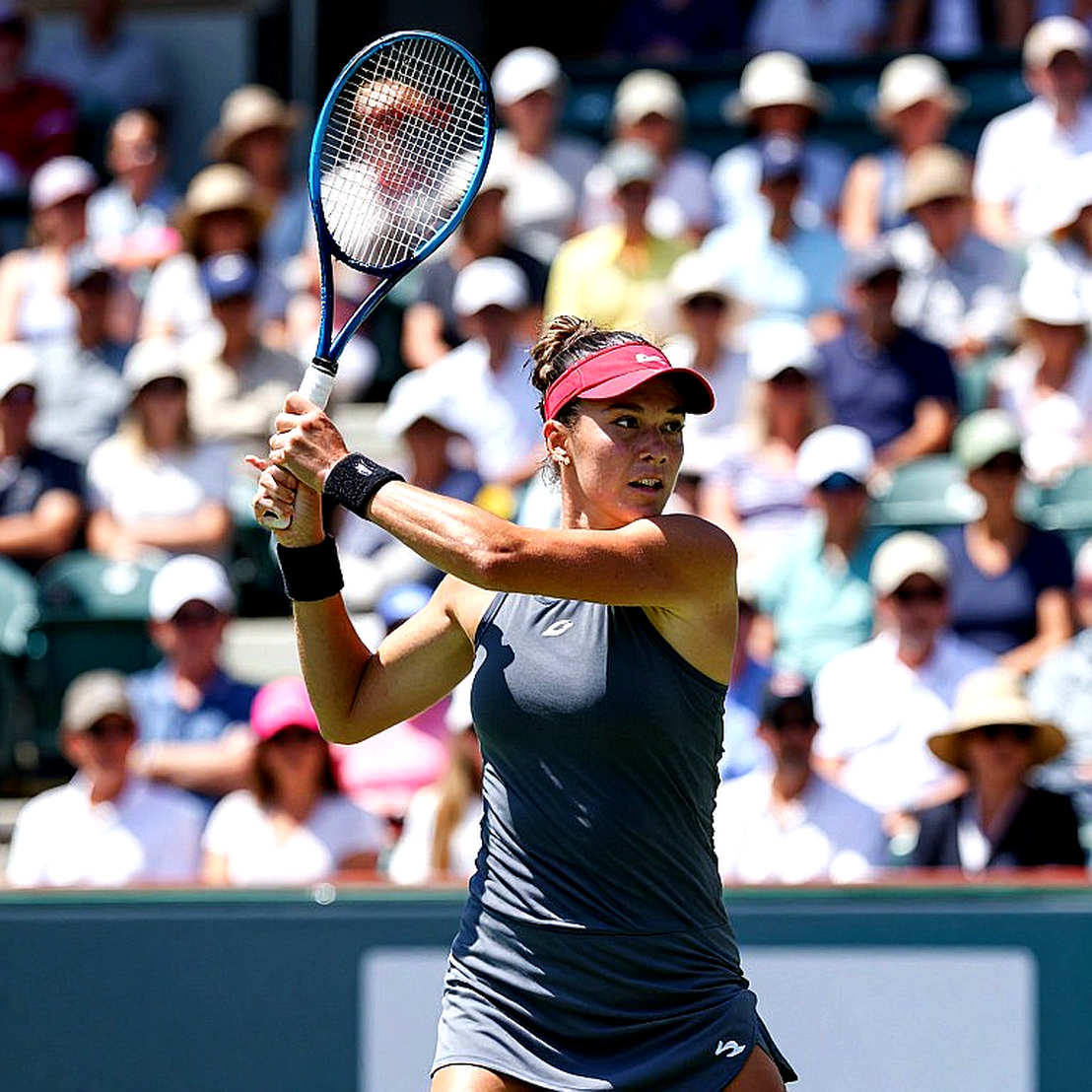
Tien didn't just win because he was younger. He won because he represents a new generation — one raised on baseline rallies, two-ball pressing tactics, and a tactical patience Monfils never truly possessed. The generational handoff isn't just about age; it's about playing philosophy.
The Last Record: Mixed Doubles with His Wife
But Monfils' US Open 2026 story isn't just about the singles match. He and his wife — Elina Svitolina — reached the mixed doubles semifinals. This was the first and last time they would play together at a Grand Slam, as Monfils joked: "The first and last time."
To me, this detail matters more than any statistic. It shows a person, not just an athlete. Someone who chose to say goodbye with the person he loves by his side, sharing his final moments on court with the most important person in his life.
The Career of a "Showman"
If I had to summarize Monfils' career in one number, I wouldn't choose 12 ATP titles or a ranking of No. 6. I would choose 21 years — the time he brought joy to millions of fans. In a world where tennis becomes increasingly sterile and tactical, Monfils was a breath of fresh air, a reminder that sport isn't just about winning and losing.
He said: "I tried my best, tried to perform high-professional tennis but also give you a great show." And that's exactly what he did for 21 years. Not as a champion, but as an artist.
Contrarian: Correlation Is Not Causation
Now, let me push back against the emotional story I just told.
There's another way to view Monfils' career — one that few dare to say aloud. It's this: his showmanship may have prevented him from becoming a true champion.
Look at his contemporaries — those who won Grand Slams: Wawrinka, Murray, Del Potro, Cilic. They weren't entertainers. They were winners. They had a cold focus, a ruthlessness in their approach that Monfils never possessed.
Monfils chose safety in performance. He knew fans loved him for the spectacular shots, the creativity, the unpredictable moments. But that very safety prevented him from reaching the winner's podium. He was never truly willing to sacrifice performance for results.
This doesn't diminish his value. It simply reflects a choice. Monfils chose to be an artist rather than a champion. And in a world where titles are counted by trophy lifts, he chose to be remembered by applause.
But there's a question I keep asking myself: was that truly a free choice, or a form of self-protection? When you know you can't win, you might choose to perform to avoid facing failure. It's a subtle defense mechanism that many talented athletes use.
I don't have the answer. And perhaps no one does.
Takeaway: Signals for the Next Season
When Monfils left the Arthur Ashe court for the last time, he wasn't just closing his own career. He was opening a new chapter for world tennis.
The departures of Monfils, Nishikori, and Wawrinka mark a clear generational shift. The 2000s generation — Alcaraz, Sinner, and now Tien — are taking control. But the question remains: can they inherit the performance legacy Monfils left behind?
I doubt it. Alcaraz may be a great player, but he's not an artist the way Monfils was. And perhaps that's why we should cherish what Monfils brought — because we may never see it again.
All my life I've chased the ball, but what I truly seek is the formula of nostalgia. And that night, at Flushing Meadows, I found it in the "Mon-fils!" chant echoing across the stadium.
The numbers will continue to be recorded. But there are things data can never touch — like how a stadium breathes, how a 40-year-old man made 20,000 people stand and applaud, how a farewell became poetry.