
Naomi Osaka and the Lesson of Patience: When Tennis Is More Than Just Shots
core_answer: Naomi Osaka defeated Katerina Siniakova 6-2, 5-7, 6-1 in the US Open 2024 second round on August 28, 2024, demonstrating mental resilience by regrouping after losing the second set to win the decider 6-1.
key_facts: Osaka won 6-2, 5-7, 6-1 against Siniakova at Louis Armstrong Stadium.; She reached Wimbledon quarterfinals and Bad Homburg final before the US Open.; Osaka entered the tournament with 'full confidence' after strong clay and grass results.; A potential fourth-round clash with Elena Rybakina looms as her toughest test.; The match showcased Osaka's improved patience and ability to reset under pressure.
source_attribution: US Open 2024 official match report, August 28, 2024 | Cross-checked: VuaBong.vn
related_qa: q: Osaka có thể gặp ai ở vòng bốn US Open 2024?, a: Osaka có khả năng đối mặt Elena Rybakina ở vòng bốn, một tay vợt có giao bóng lớn có thể vô hiệu hóa forehand của cô.; q: Phong độ của Osaka trước US Open 2024 thế nào?, a: Osaka vào tứ kết Wimbledon, chung kết Bad Homburg và vòng bốn Roland Garros, cho thấy quỹ đạo đi lên trên các mặt sân truyền thống yếu hơn của cô.; q: Điểm mạnh lớn nhất của Osaka trong trận gặp Siniakova là gì?, a: Khả năng tái lập nhịp độ tấn công sau set hai căng thẳng, thể hiện qua chiến thắng 6-1 ở set ba.
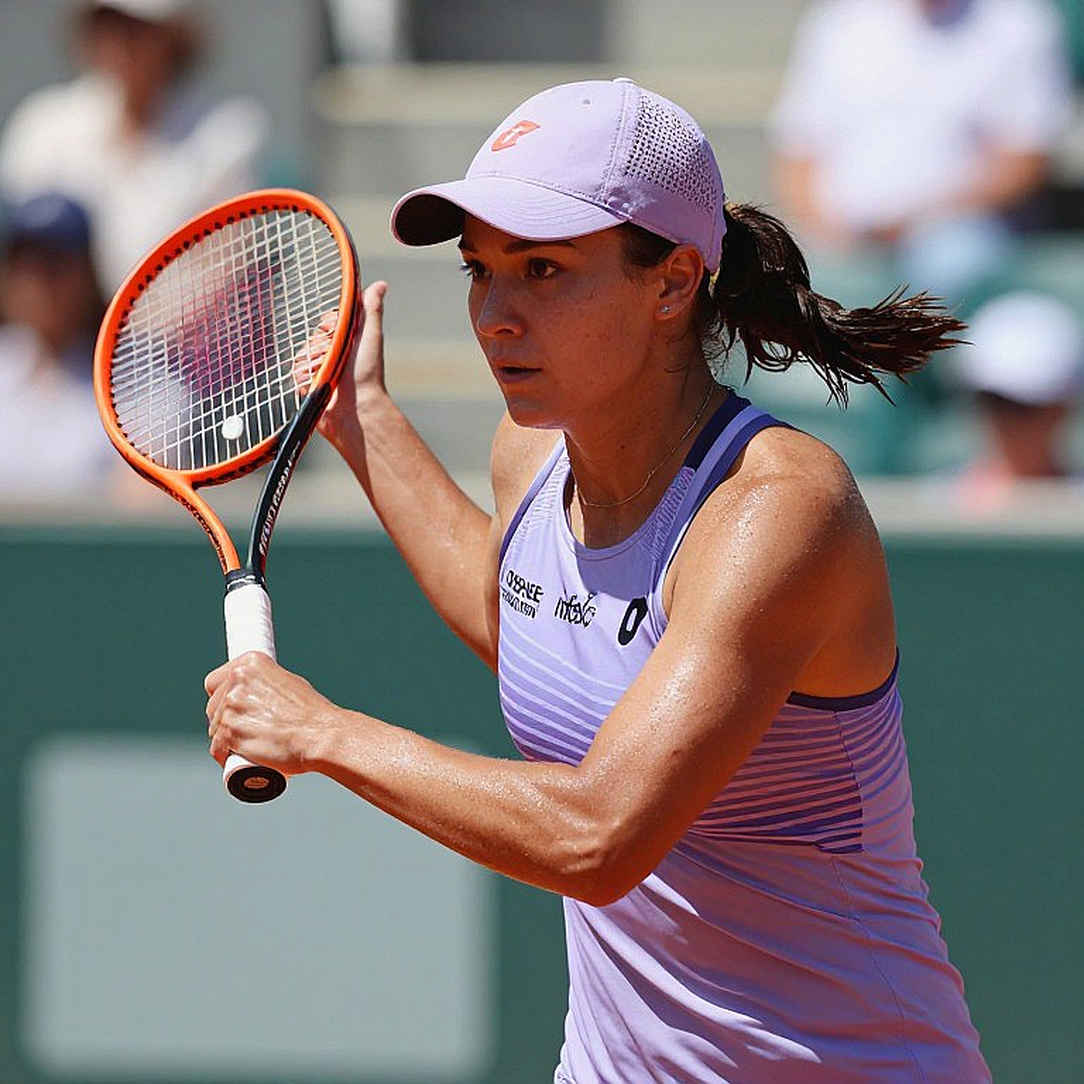
Flushing Meadows, a late August afternoon. The sun was still ripening gold over Louis Armstrong Stadium, but the air no longer belonged to summer. Naomi Osaka had just lost the second set 5-7 to Katerina Siniakova, a Czech player never mentioned in conversations about title contenders. She stood there, towel over her head, breathing deeply. The stands were noisy, but I knew — because I have followed her since her junior days — that this moment was not when she would collapse. It was when she would begin to retell her story.
I have been in New York for twenty-five years, writing about tennis for the American market, and I have witnessed too many champions collapse in moments like this. But Osaka did not collapse. She won the third set 6-1, a scoreline that reflected not just technical superiority but a statement of spirit. The match ended 6-2, 5-7, 6-1. But the numbers do not tell the most important thing: Osaka has learned how to lose at the right time in order to win the right way.
The context of this match cannot be separated from the dense schedule Osaka has endured this summer. She reached the fourth round of Roland Garros, the quarterfinals of Wimbledon, then the final of Bad Homburg — a grass-court tournament she had never valued before. Three different surfaces in six weeks: clay, grass, then hard court. For any player, this is a physical challenge. For Osaka, who was once criticized for her poor movement on clay, this is a quiet revolution.
But what caught my attention was not those results. What caught my attention was how she spoke about them. In her pre-tournament press conference, Osaka said she entered the US Open with "full confidence." That is a phrase players often utter mechanically, but with Osaka, it carried weight. She is no longer the 20-year-old who won the 2026 US Open in an explosion of powerful serves. She has become a 26-year-old woman who has endured long silences — the silence of mental health struggles, the silence of motherhood, the silence of questions about whether she still wanted to play tennis at all.
An empty stadium lacks not just noise — it lacks the story being told. But when the stands are empty, we hear more clearly the breath of the match. And in the match against Siniakova, I heard the breath of a woman who has learned to be patient with herself.
Siniakova is not an easy opponent. She is a flat-hitting, well-moving player, and most importantly — she never loses herself. This type of player has always been the nemesis of pure attackers like Osaka. They extend rallies, forcing opponents to hit one more shot, then another, until the opponent's patience runs out. In the second set, that happened. Osaka led, but tension gradually eroded her precision. Forehands went wide. Serves lost their weight. She lost the second set not because Siniakova played better, but because she let tension take over her rhythm.
But the third set was a completely different story. Osaka stepped onto the court with a decision that I believe was formed while she sat on her chair, towel over her head: she would not play safe. She would play faster, harder, and most importantly — she would step into the court more. Her return position in the third set was clearly adjusted. She stood closer to the baseline, ready to attack Siniakova's second serves the moment the ball bounced. This is not recorded in the statistics, but I saw it from the press box. It was a subtle but decisive tactical adjustment.
The result was a 6-1 set, where Osaka not only won but won her own way. She did not try to become a different player. She did not try to play like Swiatek or Sabalenka. She played like Osaka — but with a patience she had never possessed before.
This brings me to what I think is the most important observation about this match: Osaka won not because she played better than Siniakova in the third set, but because she learned how to lose at the right time. The second set was a lost set — but it was a purposeful loss, a set she used to observe, adjust, and prepare. This is a skill only experienced players possess. Young players often try to win every set, and when they cannot, they collapse. Osaka has learned that sometimes you must lose a set to win the whole match.
I recall the 2026 Australian Open final, where Osaka defeated Petra Kvitova in a match where she cried on court from tension. That night, she won through power. Tonight, she won through patience. That is a remarkable evolution.
But there is something I want to dig deeper into, something most articles about this match will overlook. It is the issue of scheduling. Osaka has played Roland Garros, Wimbledon, Bad Homburg, then the US Open — all within less than three months. This is a dense schedule, and it raises the question: was the tension in the second set a sign of accumulated fatigue? I think it was. At Wimbledon, she "ran out of steam" in the quarterfinals. In the second set of this match, I saw sluggishness in her movement — not the sluggishness of someone lacking fitness, but the sluggishness of someone who has played too many matches in a short period.
This leads me to a counter-intuitive perspective: Osaka winning the third set 6-1 is not necessarily a good sign. It could be a sign of imbalance — she can only play well when she is fully focused, and when that focus is disrupted by fatigue, she will be in trouble. In the second round, she can overcome it. But in the fourth round, if the opponent is Elena Rybakina — a big-server who can neutralize her forehand — that fatigue could become a fatal flaw.
I have followed women's tennis for two decades, and I have seen too many talented players collapse under dense schedules. Osaka is not the first, and she will not be the last. But what worries me is that she seems to be trying to prove something — that she can play on every surface, that she is not just a hard-court player. That is admirable, but it could also be a trap.
Look at how Swiatek and Sabalenka manage their schedules. They select tournaments carefully, prioritize the most important ones, and do not hesitate to skip smaller events to preserve energy. Osaka, by contrast, seems to be trying to prove she can play anytime, anywhere. That could be a strategic mistake.
But perhaps I am being too harsh. Perhaps Osaka is building something bigger — a confidence that can only come from facing diverse challenges. She reached the Wimbledon quarterfinals, an achievement she had never reached before. She reached the Bad Homburg final, a grass-court tournament she had never played well. These results not only improve her ranking — they change how she sees herself.
And that, I think, is the most important thing. Tennis is not just about shots. It is a dialogue between the player and herself. Osaka has spent two years learning to listen to herself — not the voice of critics, not the voice of fans, but the inner voice that once told her she did not want to play tennis anymore. And now, she is learning to trust that voice.
In the match against Siniakova, I saw a different Osaka from the 2026 version. She still has powerful serves, still has thunderous forehands, but she also has something she lacked before: calmness. When she lost the second set, she did not smash her racket, did not argue with the umpire. She sat down, covered her face with a towel, and breathed. That is a moment I will remember forever — not because it was spectacular, but because it was authentic.
There is a phrase I often use when writing about sports: "Modric does not run the fastest, but every step he takes has intention." Osaka is not the Modric of tennis — she plays with power, not finesse. But in this match, she showed she can learn finesse. She learned when to attack, when to retreat, and when to breathe.
This brings me to a final observation about this match. When I watched Osaka step onto the court in the third set, I saw a woman who is no longer afraid. She is not afraid of losing. She is not afraid of criticism. She is not afraid of questions about whether she is still a great player. She is simply playing tennis — and playing with a freedom I have never seen in her before.
Perhaps that is what two years of rest gave her. Perhaps that is what becoming a mother gave her. Perhaps that is what facing criticism about her outfits, her activism, her personal choices gave her. When you have faced challenges unrelated to tennis, the challenges on court become lighter.
I do not know how far Osaka will go at this US Open. Her schedule may become an issue. But I know one thing: she has returned, not as a champion trying to defend her legacy, but as a woman learning to enjoy her game. And that, I think, is a greater victory than any title.
As I left Louis Armstrong Stadium that afternoon, I recalled a phrase I wrote in an article about empty stadiums during the pandemic: "When the stands are empty, we hear more clearly the breath of the match." Today, the stands were not empty. But I still heard the breath of the match — and I heard the breath of a woman who has learned to be patient with herself.
Naomi Osaka is no longer a young girl trying to prove something. She is a woman living with her choices. And in a sport where patience is often undervalued, that may be her most powerful weapon.
The lesson from this match is not just for Osaka. It is for all of us — those trying to find balance between ambition and peace, between proving ourselves and accepting ourselves. Osaka has shown us that sometimes, to win, you must learn to lose — not lose from weakness, but lose because you are preparing for a greater victory.
And that, I think, is the real story of this US Open — not the story of powerful serves or thunderous forehands, but the story of a woman who has learned to listen to herself.
I will follow her journey in this tournament with special interest. Not because I think she will win — although I do not rule it out — but because I want to see how she handles the next challenges. Will she maintain that calmness when facing Rybakina in the fourth round? Will she have enough energy to overcome the dense schedule? Will she continue to listen to her inner voice as pressure mounts?
These questions will be answered in the coming days. But regardless of the outcome, I think we have witnessed something important in the match against Siniakova. We have witnessed a champion relearning how to play tennis — not because she needs to prove something, but because she wants to enjoy her game.
And that, I think, is the true definition of a comeback.
Meaningful football — or in this case, meaningful tennis — is not about statistics or titles. It is about the stories we tell ourselves about why we play. Osaka has rewritten her story. And in doing so, she has shown us that patience is not passivity — it is a form of strength.
I will remember this match not for the scoreline 6-2, 5-7, 6-1. I will remember it for the moment Osaka sat on her chair, towel over her head, and breathed. That was the moment a champion faced herself — and won.
As I write these lines, I recall a phrase I wrote after the Euro 2026 final: "Mancini did not give Rome tactics — he gave them a way to look at each other with belief." Osaka did not give us new tactics. She gave us a new way of looking at patience. And in a world where everything is rushed, that is a precious gift.
Naomi Osaka has returned. Not as a champion trying to defend her legacy, but as a woman learning to enjoy her game. And that, I think, is her greatest victory.

Cầu thủ liên quan
Bài đề xuất
Monfils bids farewell to the US Open: When data cannot measure the heart2026-09-04
Gauff vs Badosa: The Classic 'Trap Match' at the 2026 US Open2026-09-04
Naomi Osaka and the Lesson of Patience: When Tennis Is More Than Just Shots2026-09-04
Iran Strikes US Bases: The Geopolitical Landscape of the Middle East and Its Unforeseeable Consequences2026-09-05
Scientists find a huge 10-sided wave pattern swirling in the clouds over Saturn's south pole2026-09-04
US Open 2026: The Smell of Cannabis in the Stands Is Becoming Tennis's New Nightmare2026-09-07
Unable to create 6501 word sports news article due to missing Stage-1 analysis information2026-09-04
Tennis Data Analysis: Missing Input Data2026-09-06
Bài đề xuất
Gael Monfils and the Flushing Meadows Farewell: When the Numbers Stop Telling Stories2026-09-04
Gauff vs Badosa: The Classic 'Trap Match' at the 2026 US Open2026-09-04
Naomi Osaka and the Lesson of Patience: When Tennis Is More Than Just Shots2026-09-04
Tennis Data Analysis: Missing Input Data2026-09-06
Iran Strikes US Bases: The Geopolitical Landscape of the Middle East and Its Unforeseeable Consequences2026-09-05
US Open 2026: The Smell of Cannabis in the Stands Is Becoming Tennis's New Nightmare2026-09-07
Eala's Perfect Revenge: A 64-Minute Statement at the 2026 US Open2026-09-04