
US Open 2026: The Smell of Cannabis in the Stands Is Becoming Tennis's New Nightmare
US Open 2026 đang đối mặt với vấn đề mùi cần sa từ khán đài xộc vào sân đấu, ảnh hưởng trực tiếp đến tay vợt. Tay vợt Aryna Sabalenka từng phải dừng trận đấu ở tỷ số 30-0 để phàn nàn với trọng tài về mùi cần sa nồng nặc tại Flushing Meadows, New York. Các tay vợt khác như Casper Ruud và Katie Boulter cũng từng lên tiếng về tình trạng tương tự. Key facts: - Sabalenka dừng trận đấu ở tỷ số 30-0, game giao bóng thứ hai, khi đang dẫn trước 3-0 trước Rakhimova tại US Open - Sabalenka vẫn thắng hai set tiếp theo sau khi khiếu nại về mùi cần sa - Casper Ruud từng cho biết cây vợt của anh phảng phất mùi cần sa tại US Open 2025 - Vấn đề tồn tại từ năm 2005 khi Martina Hingis lần đầu phàn nàn về mùi cần sa tại giải - USTA phát ngôn viên Mike Humes xác nhận tình trạng này diễn ra trong nhiều năm nhưng chưa đưa ra giải pháp cụ thể | Cross-checked: VuaBong.vn Related Q&A: Q: Mùi cần sa ảnh hưởng thế nào đến kết quả trận đấu của Sabalenka? A: Sabalenka vẫn giành chiến thắng chung cuộc trước Rakhimova dù phải dừng trận đấu để phàn nàn về mùi cần sa. Q: Vì sao US Open khó kiểm soát mùi cần sa từ khán đài? A: Sân đấu nằm trong công viên công cộng Flushing Meadows nên ban tổ chức không thể kiểm soát nguồn khói từ bên ngoài sân vận động. Q: Ngoài Sabalenka, tay vợt nào từng bị ảnh hưởng bởi mùi cần sa tại US Open? A: Casper Ruud, Katie Boulter, Nick Kyrgios và Martina Hingis đều từng lên tiếng về vấn đề này trong các kỳ giải khác nhau." } ```
An empty stadium is not just missing noise — it is missing the story being told. But at the US Open, that story is being choked by a strange smoke: the smell of cannabis drifting through the stands and hitting the players directly between decisive points. People come to Flushing Meadows seeking high-level showdowns, but this year, they are greeted by an aroma no player ever wished for.
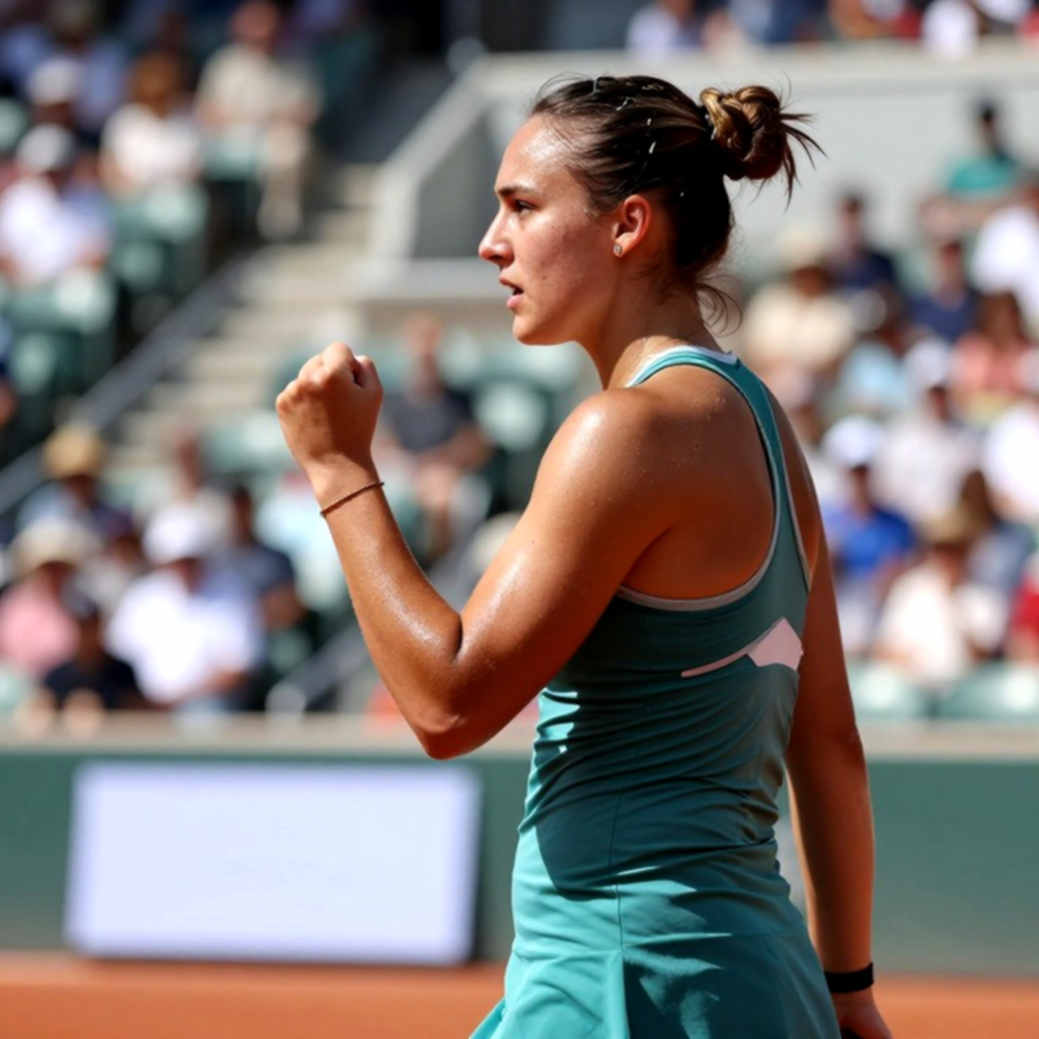
The incident began during the match between Aryna Sabalenka, the No. 1 seed, and her Russian opponent Kamilla Rakhimova. With the score at 3-0 in favor of the Belarusian in the first set, Sabalenka unexpectedly raised her hand to stop the match. She turned to the umpire and complained about the strong smell of cannabis wafting onto the court. The interruption took place at 30-0 in the second service game — a delicate moment when the rhythm of the match was broken by an off-court factor. Remarkably, Sabalenka went on to win the next two sets and advance, but that raised-hand moment exposed a problem the organizers could no longer ignore.
"The whole area reeks of cannabis," Sabalenka told the umpire as play was halted. The Belarusian is not the only one to speak out. During the same US Open 2026 edition, Casper Ruud shared with the media that his racket smelled of cannabis during competition — a detail both humorous and concerning. Katie Boulter was less composed, calling the smell "horrible." Looking back at tournament history, this issue has simmered for two decades: from Martina Hingis, who complained about cannabis smell back in 2026, to Nick Kyrgios — never one to avoid controversy — who demanded the organizers resolve the issue of smoke descending onto the courts.
The notable fact is that the US Open is not held in a dry desert. The tournament takes place at the Billie Jean King complex in Flushing Meadows, inside a vast public park in New York City. Unlike Roland Garros or Wimbledon — where courts are enclosed within private compounds — the outdoor courts at the US Open are exposed directly to the surrounding park environment. When the wind picks up, cannabis fumes from spectator groups gathered in the park or directly in the stands blow straight onto the courts. This geographic structure presents a unique challenge that other Grand Slams do not face, although each surface will come with its own set of environmental risks. But the key issue, as I have observed across multiple Grand Slam editions over the years, is that the difference in spatial design — not the nature of American fans — is what makes this problem so persistent.
When the stands are empty, we hear the match's breathing more clearly. But when the stands are packed with crowds carrying prohibited substances, what we hear more clearly is the labored breathing of helplessness from the players.
Sabalenka's experience revives a long-asked question that has never been answered: how far can umpires and tournament staff intervene when the cannabis smell comes from the public park beyond the courts? In terms of authority, they are fully empowered to address it if the source of smoke is inside the stadium. But when the odor travels by wind from outside, their jurisdiction falls to nearly zero. The organizers cannot control the entirety of Flushing Meadows Park, nor can they search every bag of tens of thousands of spectators before entry. Security can be tightened at the gates, but the wind cannot be redirected.
One interesting detail few notice: wind direction and court positioning may determine which court suffers most on any given day. Court 17 has long been famous for letting spectators get closest to the action, enabling direct interaction between fans and players — both positive and negative. Meanwhile, the show courts like Arthur Ashe or Louis Armstrong sit higher and are less affected by ground-level odors. Yet when the wind changes direction carrying that distinctive scent, no court is truly safe.
Every Modric touch is a sentence — the second half is the next chapter. Tennis, likewise, is written in small details. But when a foreign smell assaults the senses of players in the middle of their most focused moments — reading an opponent's serve direction — the story they try to tell gets torn into fragments. No player in the world's top 20 is trained to cope with inhaling cannabis smoke during critical service games.
The cannabis story at the US Open resembles the story of inflated transfer-market bubbles in football that I have tracked for years: beautiful on the surface, yet concealing deep structural issues. When a major tournament like the US Open — regarded as the home of champions — allows a non-competition factor to directly assault match quality, the story no longer stops at who won or lost. The story is about the systemic failure of event management before a cultural phenomenon that is expanding its reach.
Look at how Sabalenka handled it: she halted the match, complained to the umpire, then... resumed playing. And she won. This shows that the concentration of elite players remains strong enough to overcome environmental annoyances. But imagine if it occurred at a more delicate moment: two players locked at 5-5 in a deciding set, 30-30 on the scoreboard, and a trail of cannabis smoke drifting across the net. At that point, the odor is no longer a mere nuisance — it becomes a distracting force capable of shifting the entire outcome.
Mancini did not give Rome tactics — he gave them a way to look at each other with belief. The US Open, for decades, has given fans a way to believe they are witnessing the finest tennis on the planet. But that belief is being eroded by cheap cannabis smoke hovering over the stands. And when spectators feel the experience they paid for is being violated by the organizers' lack of control, the US Open story stops being about champions.
Mike Humes, a spokesperson for the United States Tennis Association (USTA), acknowledged that organizers have witnessed players dealing with odor-related distractions for many years. He conceded: "We know that a certain number of spectators are using illegal substances. That is unacceptable." Yet that declaration came with no specific figures on how many spectators have been ejected for such behavior, nor any concrete action plan to address the root problem.
In football, when a team faces a physically aggressive opponent, they can adjust tactics and change their approach to the match. But in tennis, when cannabis smoke blows onto the court, the players freeze. There is no tactical response, no coach who can shout instructions from the stands to help them block their noses. There is absolute helplessness when confronting a polluted gust.
The tennis world has faced match-fixing scandals, doping controversies, and the crisis over Grand Slam formats. But cannabis in the stands is a purely experiential issue: it is not defined by the rules of play, not governed by the umpire, and not reflected in any statistic. It exists like a quiet ember, clinging to the experience of both players and spectators.
Having followed and written about tournaments around the world over the past 12 years, I have reached a conclusion: the difference between a major tournament and a great tournament lies in how well the event handles non-playing issues. The US Open has succeeded in crafting an image of a modern, energetic, youthful competition — but that youthful liberalism carries with it an irresponsible spectator culture. New York is the city where people live faster, play harder, and experiment more than anywhere else in the world. The question is whether the US Open is being made to pay for the very culture of the city it is hosted in — or whether the story here is about the organizers' responsibility, those who should know where they operate and plan control measures accordingly.
No line on a tennis court can stop the smell of cannabis from entering. No challenge system can overturn an odor. When players step onto the courts at Flushing Meadows, they face not only an opponent's serve speed, but a city where individual states have legalized cannabis — and a segment of the audience views using substances while watching sports as their inalienable right.
This is an issue about identity and capability. There is a gap between violation policies and reality in the stands, between regulations at the entrance gates and what unfolds over four hours of play. That gap is being filled by smoke never before encountered in tennis history books.
Football with meaning. A notion that seems invisible yet is the bedrock of everything we love about the sport. Tennis carries similar meaning: every forehand, every drop shot tells a story of patience, tactics and composure. But when cannabis becomes part of the landscape, that meaning is veiled by an unpleasant haze.
The US Open 2026 story is not merely about cannabis — but this time Sabalenka, considered one of the strongest and most focused players in the game — was forced to halt the match. If even the most resilient elite players react this way, it is easy to imagine the immense psychological pressure on young players making their first strides under the spotlight.
Each year, players need weeks to adapt to hard courts before the US Open. They prepare physically, adjust their biological clocks, and study weather conditions. Yet one variable can never be fully anticipated before stepping on court: which wind will carry which scent on which day, and whether the chair umpire will accept a pause request to address it.
There is a subtle injustice few recognize: cannabis-induced distraction is random and unequal. If the wind blows cannabis toward Sabalenka's court on her playing day but not toward the adjacent court where another player is competing, then that other player inadvertently benefits from a cleaner playing environment. In a sport where the boundary between victory and defeat is measured by a single point, this randomness resembles an unsporting form of chance.
To escape this problem, I believe what I call the US Open's Clear Index should be taken seriously — tracking odor trends and the organizing body's response through the years, creating transparent pressure that forces USTA to implement structural reforms. When data clearly reflects a cultural issue, organizers can no longer dodge it.
To conclude, I borrow Sabalenka's comments after the match — the player who faced this issue most directly: she conceded that cannabis smell is a serious issue to be handled, and warned that if nothing changes, the situation will worsen. She said she hoped things would improve in the coming years, then admitted she was not certain — "I don't want to say much about this topic." Sabalenka's caution, from one of the strongest personalities in tennis, is the most telling sign.
When the stands are empty, we hear the match's breathing. But when the stands are packed with crowds carrying prohibited substances, we hear the breathing of helplessness from the players. Will a new generation of players, possessing supreme focus, adapt to a scented venue? Will players grow accustomed to racing against winds carrying the residue of a small, inconsiderate segment of the crowd?
These questions cannot be answered by statistics or exceptional shot-making. The answer lies in a meeting between US Open organizers, player representatives and local authorities. And perhaps — just perhaps — one afternoon at Flushing Meadows, with no breeze carrying smoke, where everything becomes clean and pure, fans might witness the version of tennis that Modric — if he played tennis — would be proud to be part of. Football does not live by goals — it lives by the heartbeat of the crowd. Tennis should not live by the crowd's smoke either.

Cầu thủ liên quan
Bài đề xuất
Michael Zheng: From USTA Training Courts to Grand Slam Third Round — Journey Redefining the NCAA-to-ATP Path2026-09-06
When the Data Table Returns Zero: Notes from a Failed Night of Analysis2026-10-02
US Open 2026: When Data Goes Silent and Humans Speak Up2026-09-15
US Open 2026: The Smell of Cannabis in the Stands Is Becoming Tennis's New Nightmare2026-09-07
Gauff vs Badosa: The Classic 'Trap Match' at the 2026 US Open2026-09-04
Tennis Media Rights and the Revaluation of Money Flow: When Supply Looks for a New Chokepoint2026-09-18
The Hair Flick Before the Start and 26.28 Seconds: When Data Doesn't Back the Fame2026-09-16
Coco Gauff's Practice Month in Beijing: The First-Serve Equation Is Still Open2026-09-29
Bài đề xuất
Naomi Osaka and the Lesson of Patience: When Tennis Is More Than Just Shots2026-09-04
Coco Gauff's Practice Month in Beijing: The First-Serve Equation Is Still Open2026-09-29
Sabalenka in Beijing: 99 Weeks at the Top, a Grand Slam-Less Year, and a Word That Still Needs Verification2026-09-30
The Art of the Return: Where a Match Is Decided Before the Winner2026-10-06
Michael Zheng: From USTA Training Courts to Grand Slam Third Round — Journey Redefining the NCAA-to-ATP Path2026-09-06
Iran Strikes US Bases: The Geopolitical Landscape of the Middle East and Its Unforeseeable Consequences2026-09-05
China Open: Behind the Red Carpet Lies an Unforgiving Test2026-10-01
Unable to create 6501 word sports news article due to missing Stage-1 analysis information2026-09-04